

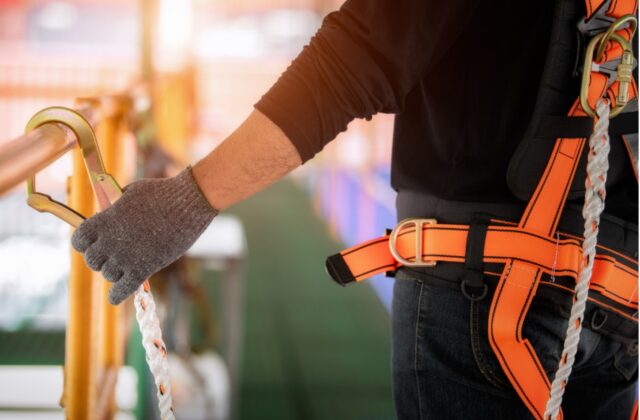

A part gets jammed in a conveyor. An operator stops the machine and prepares to remove the obstruction so production can resume as quickly as possible.
It seems like a simple task. After all, the machine is stopped.
But is it actually safe? Could some components still move? Is an unexpected restart possible?
Situations like this highlight an important reality: machine safety should never depend solely on workers being careful.
In Quebec, employers must first ensure their equipment is safe and that workers cannot access hazardous areas during normal operations.
Machine risk assessments, protective devices and lockout/tagout procedures are all part of an effective prevention strategy. Training comes into play according to each employee’s responsibilities and tasks.
So, how can you tell whether your machines are properly safeguarded? And where should you start to reduce the risk of workplace accidents?
Why Is a Machine Risk Assessment Important?
An industrial press, conveyor, mixer or cutting machine can present very different hazards.
Some moving parts can catch a worker’s hand or clothing. Others can cause crushing injuries, cuts or unexpected movements.
And these risks aren’t always obvious at first glance.
That’s why a machine risk assessment is the starting point for an effective machine safety program.
It helps employers:
-
Identify hazards associated with each machine.
-
Assess risks during different phases of operation.
-
Determine whether existing safety devices are adequate.
-
Identify the corrective measures required.
-
Prioritize improvements based on risk levels.
Consider an industrial press. During normal production, hazardous areas may be protected by appropriate safety devices. But what happens when an employee needs to make an adjustment, clean a component or clear a jam?
A proper risk assessment considers all these situations, not just the machine’s normal operation.
At Santinel, our machine safety consulting services help businesses identify hazards, assess risks and determine appropriate protective measures for their equipment.
Machine Guarding: Eliminate Risks Before Relying on Worker Awareness
Once hazards have been identified, the priority is to eliminate or reduce risks at the source.
The objective is straightforward: prevent workers from accessing hazardous areas while machines are operating normally.
Different types of protective devices can be used to achieve this.
Fixed Machine Guards
Fixed guards, such as protective barriers, panels or mesh enclosures, help prevent access to dangerous moving parts.
They are particularly useful when workers do not need to access certain machine components during normal operations.
Interlocked Guards
Some machines require operators to open a guard regularly to perform a specific operation.
In these situations, an interlocking device can be used to prevent certain hazardous movements when the guard is open.
Depending on the level of risk, the safety system may also require redundant control architecture, monitoring functions or other measures to achieve the appropriate level of protection.
Other Machine Safety Devices
Light curtains, presence-sensing devices and other protective systems may also be appropriate.
The right solution depends on the machine’s characteristics, the hazards identified and the applicable safety requirements.
A properly safeguarded machine should not force operators to rely constantly on their reflexes to avoid an accident.
There’s an important difference between asking workers to be careful around a hazard and implementing measures that actually prevent exposure to that hazard.
Do Machine Operators Need Machine Safety Training?
This is a common question among employers.
The answer depends largely on the equipment being used and the tasks being performed.
When a machine is properly safeguarded, an operator performing normal production activities does not necessarily need extensive, specialized machine safety training.
However, operators must know how to use their equipment safely.
This includes understanding machine controls, operating procedures, the limits of their responsibilities and what to do when something goes wrong.
For example, an operator must understand that removing a guard or bypassing a safety device to speed up production is not acceptable.
They should also know whom to notify when a problem occurs and when operations need to stop.
The goal isn’t to turn every operator into a machine safety specialist. It’s to ensure workers have the skills and knowledge required to perform their tasks safely.
Job-specific training and practical instruction remain important. However, they can never replace a proper risk assessment or adequate machine guarding.
When Is Lockout/Tagout Required?
Even a properly safeguarded machine may require workers to access hazardous areas for certain tasks.
This is often the case during maintenance, repairs, cleaning, troubleshooting, clearing jams or certain adjustments.
In these situations, the guards used during normal operations may not provide sufficient protection.
Appropriate energy control measures must therefore be implemented in accordance with applicable regulatory requirements.
What’s the Difference Between Machine Guarding and Lockout/Tagout?
The distinction is important.
Machine guarding involves implementing protective measures that prevent access to hazardous areas during normal machine operation.
Lockout/tagout (LOTO) is an energy control method used to protect workers during certain tasks that require access to hazardous areas.
It helps prevent unexpected startup or the release of hazardous energy.
Under Quebec’s Regulation respecting occupational health and safety (RSST), lockout or another method providing equivalent safety is generally required before certain tasks are performed in a machine’s danger zone, subject to regulatory exceptions.
Simply pressing a stop button, even an emergency stop, does not automatically replace a proper energy control procedure.
To better understand these requirements, read our article on lockout/tagout in the workplace: when and how to apply it.
Santinel also offers lockout/tagout consulting services to help organizations develop energy control programs and procedures adapted to their equipment.
Who Actually Needs Specialized Machine Safety Training?
Not everyone working near a machine has the same training needs.
The required knowledge and skills depend on each person’s responsibilities, the tasks they perform and the risks involved.
Maintenance Personnel
Mechanics, electromechanics and maintenance technicians may need to access machine components that are normally protected by guards.
They must understand the hazards associated with different energy sources, the applicable energy control procedures and safe work practices.
Depending on their responsibilities, they may also require training on inspecting and identifying problems with certain protective devices.
Workers performing these tasks can benefit from lockout/tagout training tailored to their responsibilities.
Supervisors
Supervisors do not necessarily need detailed technical expertise in the design of machine safety systems.
However, they must be able to recognize hazardous situations, stop unsafe operations and ensure appropriate corrective action is taken.
They also play an important role in verifying workers’ competencies and ensuring safety procedures are followed.
OHS Professionals and Health and Safety Committee Members
For occupational health and safety (OHS) professionals and health and safety committee members, the perspective is broader.
Their role includes helping identify workplace hazards, participating in inspections and following up on preventive measures.
These risks aren’t limited to machinery. They may also involve ergonomics, workplace traffic, falls, work methods or how tasks are organized.
This broader approach is part of an employer’s general prevention responsibilities. To learn more, read our article on the differences between an OHS action plan and a prevention program.
When a situation requires an in-depth technical assessment of a machine, it’s important to involve someone with the appropriate expertise.
What About High-Risk Tasks? The Importance of a Job Safety Analysis
Machine guarding alone cannot eliminate every workplace hazard.
Certain activities involve specific risks related to the task itself, the work environment or the methods used.
This is where a Job Safety Analysis (JSA) can be particularly valuable.
A JSA involves breaking down a task into individual steps, identifying the associated hazards and determining the preventive measures required.
For example, a maintenance operation may involve several steps: preparing the work area, controlling hazardous energy, accessing the equipment, completing the work and safely returning the machine to service.
A Job Safety Analysis helps clarify the procedures to follow and the competencies required at each stage.
Based on the findings, the employer may need to provide additional training, hands-on instruction or supervision.
The objective is to ensure every worker has the necessary skills and knowledge to perform their tasks safely.
A JSA complements a machine risk assessment. It does not replace the technical safeguards or energy control measures required for machinery.
What Are the Machine Safety Requirements in Quebec?
In Quebec, the Act respecting occupational health and safety (AOHS) and the Regulation respecting occupational health and safety (RSST) establish requirements governing machine safety and employer responsibilities.
Division XXI of the RSST addresses protective measures, safety devices and hazardous energy control methods.
Employers must ensure that machinery is adequately protected, risks are controlled and workers receive the information, training, instruction and supervision appropriate to their tasks.
Simply providing training does not make a machine safe.
Likewise, installing a guard does not automatically mean that every regulatory requirement has been met.
Effective prevention requires a combination of measures that reflect the equipment used and the tasks actually performed.
For more information about employer responsibilities, consult our guide to occupational health and safety obligations in Quebec.
How Can You Tell Whether Your Machines Are Properly Safeguarded?
You don’t have to wait for an incident to ask the right questions.
Here are five important areas to review in your workplace.
-
Have the risks been assessed? Have hazards been identified throughout the different phases of machine operation?
-
Are the protective measures adequate? Do guards and safety devices prevent access to hazardous areas under the intended operating conditions?
-
Are hazardous interventions properly controlled? Are energy control procedures in place when work requires access to hazardous areas?
-
Are responsibilities clearly defined? Do operators, supervisors and maintenance teams understand which tasks they are authorized to perform?
-
Do workers have the required competencies? Have employees performing high-risk tasks received the appropriate information, training and practical instruction?
If some of these answers are unclear, a machine risk assessment can help establish a more accurate picture of the situation and identify priority improvements.
And if your organization already has energy control procedures in place, it may also be worth verifying whether they still meet your current operational needs.
Learn more about when and why to review your lockout/tagout program.
Machine Safety Starts Long Before Training
A company can provide excellent safety training, but if a machine has accessible hazardous areas or inadequate protective devices, the risk remains.
That’s why machine safety must begin with hazard identification, risk assessment and the implementation of effective protective measures.
Lockout/tagout procedures, safe work practices and appropriate training then complete the prevention process, depending on the tasks performed.
The best approach isn’t simply to remind workers to be careful. It’s to provide a workplace where hazards have been identified and risks are properly controlled.
Need Expert Guidance on Machine Safety?
Are you unsure whether some of your machines meet applicable safety requirements? Would you like to identify potential hazards or determine which protective measures should be implemented?
Santinel’s specialists can help you assess machine risks, evaluate your equipment and identify corrective measures suited to your operations.
Explore our machine safety consulting services and discover how we can help make your workplace safer.


