


The back-to-school season brings plenty of changes for families. Between work schedules, extracurricular activities, and professional development days, many parents find themselves asking the same question:
Is my child ready to stay home alone?
For many families, this is an important milestone. Yet, in Quebec, there is no legal minimum age that determines when a child can be left home alone.
What matters most is your child’s maturity, independence, and ability to respond appropriately if something unexpected happens.
In this guide, you’ll learn:
- what experts recommend;
- the essential safety skills every child should have;
- how to determine whether your child is truly ready; and
- why taking a home alone safety course can help build confidence for both children and parents.
Is There a Minimum Age for Staying Home Alone?
Contrary to what many parents believe, Quebec law does not establish a minimum age for leaving a child home alone.
However, child safety organizations generally recommend the following guidelines:
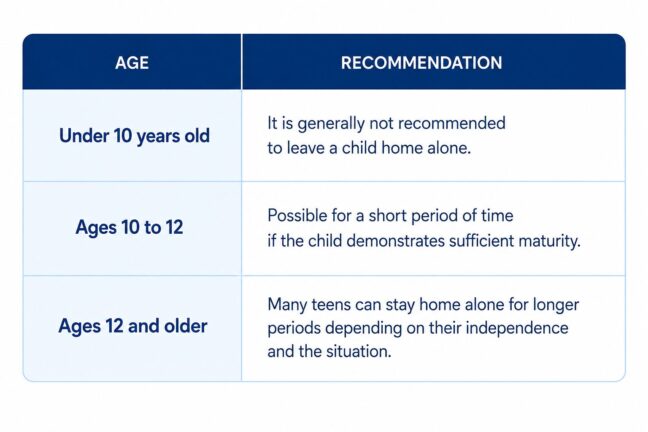
Age, however, is only one factor.
Every child develops at their own pace. While some 10-year-olds demonstrate remarkable independence, others may need more time before they’re ready.
Ultimately, parents should base their decision on their child’s abilities rather than their age alone.
How Do You Know If Your Child Is Ready?
Before leaving your child home alone, ask yourself a few important questions.
Can your child:
- stay calm when something unexpected happens?
- follow instructions without adult supervision?
- recognize a dangerous situation?
- call 911 if necessary?
- contact a trusted adult?
- follow your household rules consistently?
A child may be 12 years old and still not be ready, while another child may confidently manage these responsibilities at age 10.
The key is not age—it’s maturity, judgment, and confidence.
Situations Your Child May Encounter While Home Alone
Even if you’re only away for an hour or two, unexpected situations can happen.
For example, your child may have to deal with:
- a cut or minor injury;
- the smell of smoke or the start of a fire;
- a power outage;
- someone knocking at the door;
- a younger brother or sister getting hurt;
- a sudden illness;
- a suspicious or unknown phone call.
Without preparation, these situations can quickly become stressful.
With the right knowledge and practical skills, however, children are much more likely to stay calm and make safe decisions.
Essential Safety Skills Before Staying Home Alone
Before allowing your child to stay home alone, make sure they know how to:
- State their full name and home address
- Call 911 in an emergency
- Contact a parent or another trusted adult
- Recognize when a situation is an emergency
- Respond safely if someone knocks at the door
- Use a telephone or cell phone confidently
- Locate the household first aid kit
- Follow your family’s safety rules
These may seem like simple skills, but when children are faced with an unexpected situation, they need to make decisions quickly.
The more prepared they are, the more confident they’ll feel—and the safer they’ll be.
What If Your Child Will Also Be Babysitting a Younger Brother or Sister?
For many families, the start of the school year also means an older child will spend time looking after a younger sibling after school.
This is an important responsibility that goes beyond simply staying home alone.
A young babysitter should be able to:
- keep younger children safe;
- recognize an emergency;
- respond appropriately without putting themselves at risk;
- stay calm under pressure;
- know when and how to ask for help.
Looking after younger siblings requires maturity, confidence, and practical safety knowledge.
With the right preparation, children can take on this responsibility with greater confidence while giving parents added peace of mind.
A Course That Goes Beyond Basic First Aid
Many parents are familiar with the Home Alone Program, which has helped young people prepare for staying home alone for many years.
Today, additional training options are available to better prepare children for the real-life situations they may encounter when they are home alone or caring for younger siblings.
Santinel’s Staying home alone + younger sibling(s) course focuses on practical, everyday scenarios that children are likely to experience.
Participants learn how to:
- prevent common household accidents;
- recognize emergency situations;
- stay calm under stress;
- call emergency services effectively;
- provide basic first aid;
- safely care for younger brothers and sisters.
Rather than simply teaching emergency procedures, the course helps children develop confidence, independence, and sound decision-making skills.
Our goal is simple:
To help young people become more independent while giving parents greater peace of mind.
Designed with Busy Families in Mind
Finding time for training isn’t always easy, especially during the busy back-to-school season.
That’s why Santinel offers a flexible course designed to fit today’s family schedules.
Course Highlights
- Designed for children 10 years of age and older
- 4-hour training session
- Available online or in person for private groups
- Daytime, evening, and weekend schedules available
- Certification valid for 2 years
This flexibility allows families to choose the option that best fits their schedule before the school year begins.
Give Your Child the Confidence to Stay Home Alone
Independence doesn’t happen overnight.
Before a child stays home alone—or takes responsibility for caring for younger siblings—they should know how to recognize dangerous situations, respond appropriately, and ask for help when needed.
Providing your child with age-appropriate safety training gives them far more than practical knowledge.
It helps them:
- build confidence in their own abilities;
- make safer decisions when faced with unexpected situations;
- remain calm under pressure;
- understand when to solve a problem on their own and when to call for help.
For parents, that preparation brings something equally valuable: peace of mind.
Knowing your child has practiced real-life scenarios and understands basic emergency procedures can make the transition to staying home alone much less stressful for the entire family.
As the new school year approaches, now is the perfect time to help your child gain the confidence and skills they need to become more independent.
Discover Santinel’s Staying home alone + younger sibling(s) course and give your child the tools they need to stay safe, confident, and prepared whenever they’re home alone.
Frequently Asked Questions
What age can a child stay home alone in Quebec?
There is no legal minimum age for leaving a child home alone in Quebec.
Most child safety organizations recommend that children under the age of 10 should generally not be left alone. Between 10 and 12 years old, some children may be ready for short periods if they demonstrate maturity, understand household safety rules, and know how to react in an emergency.
Ultimately, parents should consider their child’s maturity rather than relying on age alone.
How long can a 10- or 11-year-old stay home alone?
There is no universally recommended time limit.
For a child’s first experience staying home alone, it’s best to begin with short periods, gradually increasing the duration as they become more confident and demonstrate responsible decision-making.
Every child develops differently, so parents should adjust the length of time according to their child’s abilities.
What should a child know before staying home alone?
Before staying home alone, children should know how to:
- call 911;
- state their full name and home address;
- contact a parent or trusted adult;
- recognize when a situation is an emergency;
- respond safely if someone comes to the door;
- react appropriately during a fire, injury, or power outage.
A home alone safety course can help children develop these essential skills before they need them.
Can a child babysit a younger sibling?
Yes—but babysitting requires additional responsibility.
A child caring for younger brothers or sisters should be able to:
- ensure their own safety first;
- keep younger children safe;
- recognize emergency situations;
- provide basic first aid if appropriate;
- know when to call for adult assistance or emergency services.
Parents should evaluate both the older child’s maturity and the younger child’s needs before assigning this responsibility.
My child is anxious. Are they ready to stay home alone?
Every child is different.
Some children naturally feel more anxious in new situations, while others are more confident.
Rather than focusing solely on age, consider whether your child can:
- manage stress appropriately;
- make good decisions independently;
- ask for help when necessary;
- remain calm during unexpected situations.
Gradual preparation and practical training often help children build confidence over time.
Why is back-to-school the best time to take a Home Alone course?
The beginning of the school year often brings new routines.
Many children begin spending time home alone after school, while others start babysitting younger siblings before their parents arrive home from work.
Completing a Home Alone safety course before these new routines begin allows children to practice important safety skills in advance, making the transition smoother and safer for everyone.
Is a Home Alone course worth it?
Absolutely.
A quality Home Alone course goes beyond teaching children what to do in an emergency.
It helps them:
- build independence;
- improve decision-making skills;
- develop confidence;
- understand basic first aid;
- recognize hazardous situations before they become emergencies.
Parents gain reassurance knowing their child has received practical, age-appropriate safety training that prepares them for real-life situations.


